

How to use this book
This is a small book, and this is the first chapter. You could finish it in one sitting.
Please don't.
Each chapter ends with a question to sit with and a small experiment to try for a week. The book is built for that pace — one chapter, seven days, then the next. Not because the chapters are difficult, but because the questions need time to do their quiet work in you.
Here is one way to walk through it:
Read a chapter slowly. Maybe over a cup of tea, maybe before bed. Don't underline. Don't take notes yet. Just let the words pass through you.
The next morning, return to the prompts at the end of that chapter. Write your answers by hand if you can. Messy is fine. Honest is better.
For the rest of the week, carry the small experiment with you. You will forget it. That is part of the experiment too — noticing when you remember, and when you don't.
The following week, move to the next chapter.
Seven chapters. Seven weeks. About two months of slow company with yourself.
Of course, you can read it however you like. Skip around. Read the whole thing tonight and come back to one chapter that pulled at you. There are no rules here.
But if you find yourself reading fast, scrolling really, ask once:
Am I consuming this, or am I letting it touch me?
That question alone is worth the price of the book
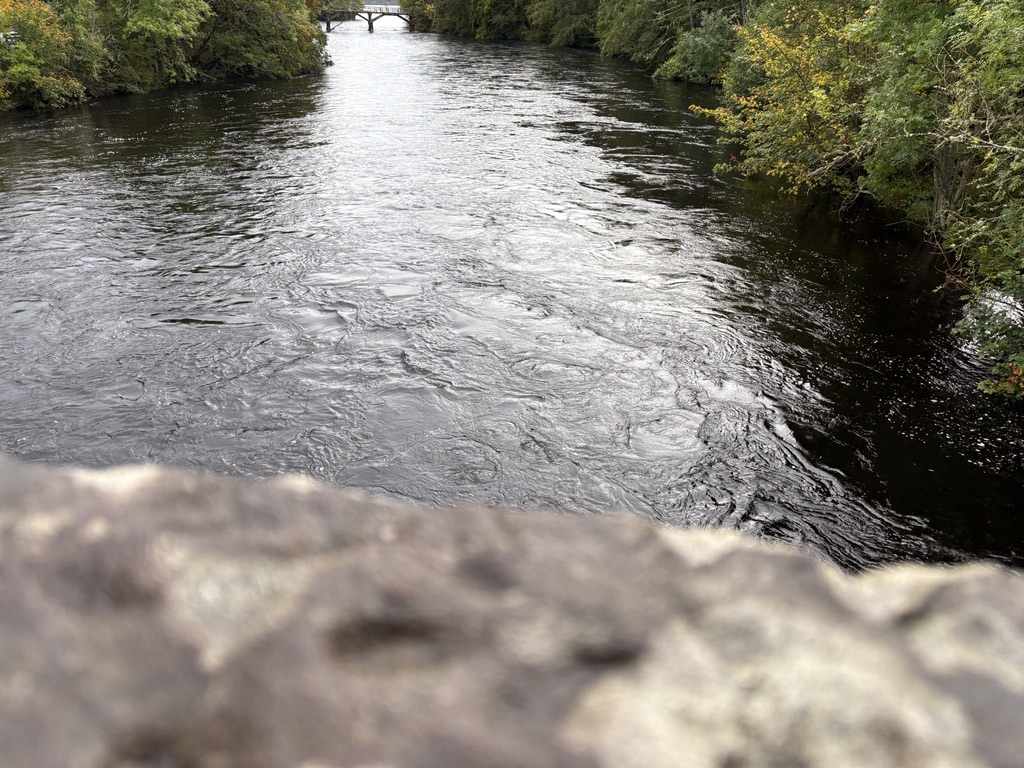
Most people try to improve their life like they’re climbing a ladder. One rung at a time. New habit. New hack. New identity.
But a life is not a ladder. It’s a river.
Some years, the water rushes. Some years, it almost disappears. Sometimes it bends so sharply you can’t see what’s coming next.
When I look back at my own writing — on Whole Explorer, on Substack, in dozens of half-filled journals — it doesn’t look like a straight line of progress.
It looks like water finding its way.
I didn’t begin writing because I had a “brand”. I wrote because something inside me hurt, wondered, loved, and didn’t know where else to go.
Maybe that’s true for you too.
You aren’t here because your life is perfectly organised. You’re here because somewhere there is confusion, pain, awe, or just a nagging sense that something essential is being forgotten.
So this module is not about “fixing yourself”. It’s about seeing your river more honestly.
Not what you wish it looked like. What it is.
My two streams (and why that matters to you)
For a long time, there were two currents running in me.
One was deeply personal.
It was full of doubts, blackhole seasons, small insights, failed attempts at meditation, half-sincere prayers, and the awkwardness of trying to live with some integrity in a noisy world.
This stream became what I now call “Whole Human”.
The other stream was more outward.
Questions about children, parents, teenagers, attention, screens, schools, and how this entire generation will survive without becoming numb or broken. This became “Whole Explorer”.
At some point, I realised: both streams come from the same source.
I couldn’t genuinely care for young people unless I was also wrestling with my own darkness, laziness, arrogance, restlessness, and fear.
And I couldn’t work on myself in isolation from the kind of world children are growing into.
Why am I telling you this?
Because I suspect you also have multiple streams inside you.
The private one: what you really struggle with when no one is watching.
The outer one: the roles you play — parent, partner, colleague, seeker, citizen.
Becoming “whole” is not about choosing one and killing the other.
It’s about slowly letting them reconnect.
What is a “whole human” anyway?
Let me try a non-definition.
A whole human is not someone who has healed everything, fixed everything, and now radiates permanent peace.
A whole human is someone who:
knows they are fragmented in many places,
is willing to look without turning away,
and cares enough to live a little more honestly today than yesterday.
Wholeness is not perfection.
It is contact.
Contact with your inner life — even when that inner life is chaotic.
Contact with your body, not only your mind.
Contact with other humans, not only your thoughts about humans.
Contact with something larger than “me”, however you name it.
When this contact is lost, life becomes strangely flat. Even if it looks successful from outside.
When this contact returns, even for a moment, something in us whispers, “Ah. This is what I was missing.”
Why we secretly fear being whole?
On the surface, everyone says they want to be more themselves.
But look a little closer.
Being whole means:
you can’t hide behind masks as easily, you may have to disappoint some people, you can no longer blame everything on parents, society, government, karma, or algorithms, and you might have to let go of identities that gave you status or safety.
Wholeness is attractive in theory and threatening in practice.
So the mind does something clever. It turns wholeness into:
a spiritual project,
an intellectual hobby,
or a distant fantasy.
Anything but a lived, messy, daily experiment.
You might recognise this pattern: reading about “awareness”, “presence”, “non-duality”, “authenticity”… and then shouting at your family five minutes later.
The goal of this module is not to make you feel guilty about that.
The goal is to help you see how your own river actually flows, without decorating it.
Your river map
Before we dive into depression, struggle, freedom, and all the rest, you need a rough map of your inner landscape as it is today.
Not ten years ago.
Not when you were an idealistic teenager.
Today.
I’ll ask you a few questions. Take them slowly. Write your answers by hand if you can. Don’t try to impress anyone — especially not some imaginary future version of yourself.
Where does your river rush?
In which areas of life do you feel most alive, engaged, curious, or quietly at peace? This might be when you’re reading, playing with your child, hiking, coding, cooking, praying, staring at the moon. Where does time move differently for you?
Where does your river dry up?
What situations feel like dry riverbeds? You go through the motions, but something in you feels absent or dead. Work meetings? Social media? Family gatherings? Solitude? Be specific.
Where does your river disappear underground?
There are seasons where on the surface, nothing seems to be happening. Inside, a lot is moving. Have you had such phases? How did they feel? What did you avoid? What did you discover?
Who or what has tried to straighten your river?
Which people, institutions, or inner voices have told you: “Walk this straight line. This is success. This is the only way.” How much of your current life is built according to their map rather than your own?
What do you secretly know?
If you allowed yourself to be brutally honest for a moment, what is one thing about your life you already know is not aligned — but you keep postponing dealing with it?
Don’t rush these.
This module is not about producing “right” answers.
It is about beginning a different kind of conversation with yourself.
A small experiment for this week
For the next seven days, once a day, pause and ask yourself:
“Right now, is my river rushing, drying up, or going underground?”
Then add one sentence:
“If I don’t judge this state as good or bad, what does it want me to see?”
That’s it.
No mystical technique.
Just a small act of noticing without immediate self-improvement.
Write your answers somewhere — a notebook, your notes app, your Supernote, a scrap of paper.
At the end of the week, read them all in one sitting.
See if your river has been trying to tell you something for a long time already.
Where we’re going next
In the next module, we’ll step into one of the darker bends of the river: depression, struggle, and the question of awareness.
Why is it so hard to “be mindful” when you feel like a zombie?
What if wholeness has room even for those months when getting out of bed feels like climbing a mountain?
For now, stay with this:
You don’t have to straighten your river. You just have to stop pretending it’s a ladder.


Write a comment ...